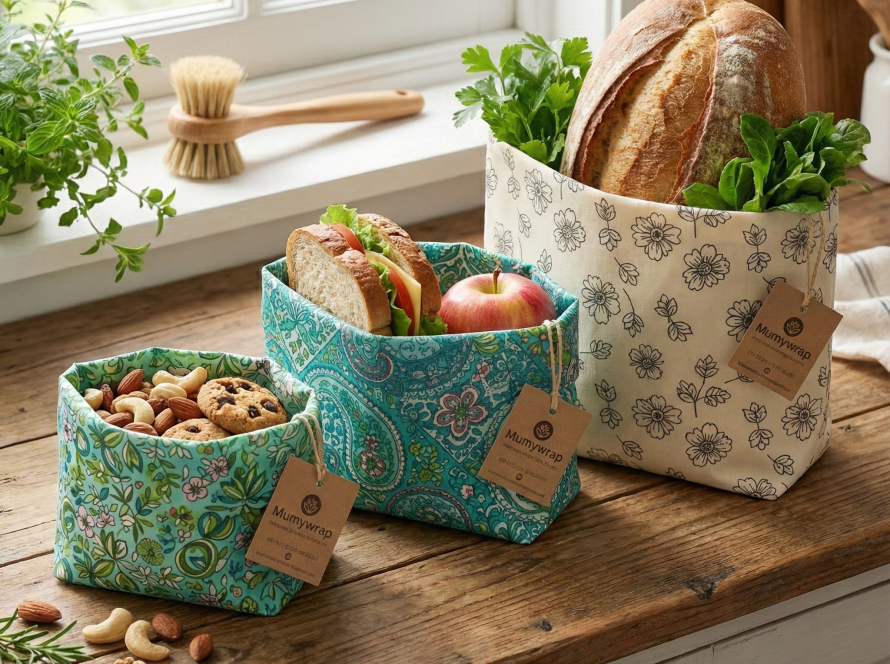
Are you ready to say goodbye to plastic wrap in your kitchen? Mummy wrap is your gateway
to the world of natural and sustainable food storage. These eco-friendly fabrics, coated with
organic beeswax, allow you to contribute to our planet while keeping your food fresh.
This food packaging solution, free from plastic, offers a strong alternative against the
environmental pollution caused by single-use plastics. While millions of tons of plastic waste
pollute our oceans and nature every year, reusable products like beeswax wraps become one of
the cornerstones of the zero waste kitchen concept.
Be Part of the Natural Food Storage Revolution
The place of Mumy wrap in your kitchen is not limited to being just a practical tool. This
product is also a concrete representation of conscious consumption habits and environmental
responsibility. Thanks to the natural mixture of beeswax, jojoba oil, and tree resin applied to
organic cotton fabric, your food is stored in a breathable environment.
This smart design, which softens with the warmth of your hands and takes shape, allows you to
securely wrap all kinds of food, from vegetables to cheeses, sandwiches to bread. Its structure
hardens when cooled in the refrigerator, creating a perfect seal that keeps freshness inside.
The Key to Long-Lasting Use: Proper CareIf you want your Mumy wrap to serve you for years, proper care techniques are vital. At this
point, I can tell you: The care process is much simpler than you think.
A simple cleaning routine that you do after each use will significantly extend the lifespan of
your product. The combination of cold water and ecological detergent provides hygienic
cleaning while protecting the wax layer. Using hot water is your biggest enemy – it can melt the
wax layer and deform the shape of the product.
1. Clean your Mummy Wrap immediately after each use.
2. Rinse it under cold water.
3. Gently scrub with ecological detergent.
4. After rinsing, wait for it to air dry.
Thanks to these simple steps, you can use your Mummy Wrap for a long time.
What is Mumy Wrap and Why Should It Be Preferred?
Mumy wrap is an innovative food storage solution formed by the combination of completely
natural materials such as natural beeswax, organic cotton fabric, jojoba oil, and tree resin. It is
also known as an alternative to plastic-free packaging and offers one of the most practical ways
to reduce plastic usage in your kitchen to zero.
The base of Mumy wrap is made of 100% organic cotton fabric. This fabric is coated with a
carefully selected mixture of natural beeswax. The wax layer gives the fabric waterproof and
sticky properties. Jojoba oil provides flexibility, while tree resin increases stickiness and adds
antibacterial properties.
The combination of these natural components allows your food to breathe while keeping it fresh.
Plastic cling films keep food in a completely airtight environment and can cause moisture
buildup. Mumy wrap, on the other hand, retains the natural moisture of food while allowing
excess moisture to escape.
Mumy wrap, a pioneer in the category of sustainable food packaging, offers a strong solution
against the environmental pollution caused by single-use plastics. A mumy wrap can be used for
1-2 years under proper care conditions. During this time, you can prevent the use of hundreds of
plastic cling films.
Plastic cling films are petroleum-based products and remain in nature for hundreds of years
without decomposing. Mumy wrap, on the other hand, can be composted or used as natural
fertilizer in your garden when it reaches the end of its lifespan. It is completely biodegradable
and does not leave harmful chemicals in the soil.The natural antibacterial properties of beeswax protect your food from bacteria. Unlike plastic
packaging, mumy wrap does not leach harmful chemicals into your food. It does not contain
BPA, phthalates, or other endocrine-disrupting substances.
You can safely wrap and store many foods such as cheese, vegetables, fruits, sandwiches, and
bread.
How to Clean and Store a Mumy Wrap? Easy Care Guide
The key to extending the lifespan of your mummy wrap and keeping it hygienic lies in the
correct cleaning and storage methods. These natural fabrics coated with beeswax require special
care and require a different approach than traditional washing methods.
You should wash your mummy wrap under cold water after each use. Using hot water is one of
the most common mistakes. The beeswax layer is extremely sensitive to heat and starts to melt
at temperatures above 60 degrees. This situation can lead to:
• Complete loss of the fabric’s stickiness
• Damage to the protective beeswax layer
• Shortening of the product’s lifespan
Cold water from the tap is sufficient to clean food residues and stains. Check the temperature of
the water with your hand and wait even if it is lukewarm.
During cleaning, you should prefer an ecological and alcohol-free dishwashing detergent.
Cleaning agents that contain alcohol or harsh chemicals can damage the wax layer and harm thenatural structure of the fabric.
Follow these steps when using detergent:
1. Take a pea-sized amount of detergent in the palm of your hand
2. Lather the detergent with your fingertips
3. Gently apply it to both sides of the mummy wrap
4. Rinse thoroughly with cold water
A very small amount of detergent is sufficient. Using too much detergent can penetrate the wax
structure and spoil the scent of the product.
When cleaning your mummy wrap, never scrub, brush, or wring it out. These actions can
crack the wax layer and damage the structure of the fabric. Gentle wiping movements with your
fingertips are enough for all cleaning.
Avoid using harsh scrubbing motions even when dealing with stubborn stains.
How to Seal Mumy Wrap? The Secret of Freshness
One of the biggest advantages of mumy wrap is its ability to keep food fresh for a long time
when sealed correctly with the right sealing technique. Unlike synthetic cling films, mumy wrap
does not stick on its own. Thanks to its structure containing beeswax, it softens with the warmth
of your hands and takes the shape of the wrapped food or container, creating an effective seal.
This natural sealing method plays a critical role in preserving freshness by minimizing the
contact of food with air.Your hand temperature is the most important tool when using a mummy wrap. The beeswax
softens and becomes flexible in response to body heat. Thanks to this property, the fabric
adheres perfectly to the surface of the food or container being wrapped and creates an airtight
layer.
1. 2. 3. 4. 5. Placement: Place the Mumy wrap over the food or container to be wrapped. Make sure
the fabric is wide enough to completely cover the food.
Gathering the Edges: Gather the edges of the fabric towards the bottom of the food or
container. There is no need to press tightly at this stage yet.
Applying Heat: Place your palms or fingers on top of the fabric and hold it with light
pressure for a few seconds. Allow your body heat to transfer to the fabric.
Sealing: When your body heat has transferred to the fabric, the beeswax will soften and
start to stick to the surface being wrapped. Press down especially carefully on the edges
and joints.
Final Check: Make sure all edges are sealed properly. If there are any loose areas, apply
your body heat to those spots again.
After sealing the Mumy wrap properly and placing it in the refrigerator, the wax will harden in
the cold environment and the seal will become even stronger. This helps to keep the freshness of
food for a long time.
Different Food Storage Areas and Usage Tips with Mumy Wrap
Using Mumy wrap when storing your vegetables in the refrigerator is an effective method to
preserve their natural freshness and nutritional value. These organic cotton fabrics coated with
beeswax allow vegetables to breathe while maintaining moisture balance. Unlike plastic bags,
Mumy wrap allows vegetables to retain their own moisture, preventing problems of wilting or
drying out.
Before wrapping leafy vegetables like lettuce, arugula, and spinach with a mummy wrap, wipe
them with a slightly damp cloth. Wrap the fabric loosely around the vegetables – wrapping too
tightly can cause the leaves to get crushed. Join the edges of the fabric together with your hand
warmth and store them in the vegetable compartment of the refrigerator. With this method, your
leafy vegetables will stay fresh for 5-7 days.
Wrapping root vegetables like carrots, radishes, and beets with a mummy wrap helps preserve
their firmness and crunchy texture. After cleaning off excess dirt from the surface of the
vegetables, you can wrap each one individually or in small groups. The waxed layer preventsmoisture loss from the vegetables and keeps them fresh in the refrigerator for 2-3 weeks.
Mumy wrap is an ideal storage solution for these high-water-content vegetables. Wrap the
vegetable completely and seal the edges by pressing them with your palm. The natural beeswax
prevents the vegetable from losing excessive moisture, while the breathable structure of the
fabric reduces the risk of mold.
There are some points to pay attention to when using mumy wrap. Make sure that the vegetables
are completely dry before wrapping them – excess moisture can lead to mold. The beeswax-
coated fabric protects the vegetables’ natural moisture while preventing moisture from coming in
from outside.
Organization in the Refrigerator
Store wrapped vegetables in the vegetable drawer or on the lower shelves of the refrigerator.
Instead of stacking them on top of each other, place each one side by side; this increases air
circulation and helps keep them fresh for a longer time.
The Ecological and Sustainable Advantages of Mumy Wrap
One of the most valuable features that Mumy wrap brings to your kitchen is its direct
contribution to the philosophy of zero waste. While plastic cling films go straight to the trash
can after each use, you can wash and reuse Mumy wrap again and again. This simple change
eliminates the amount of plastic waste measured in kilograms on an annual basis.
The combination of organic beeswax, natural resin, and cotton fabric used in the production of
Mumy wrap creates a structure completely free from synthetic chemicals. It offers an ideal
solution for conscious consumers looking for a traditional plastic-free wrapping alternative.
The natural antibacterial properties of beeswax support the hygienic storage of food while
causing no harm to the environment.
The organic cotton fabric base protects soil and water resources because it rejects the use of
pesticides in agricultural production. The beeswax produced by bee colonies within their natural
life cycle is a product of sustainable livestock farming practices. This choice of material
minimizes the environmental footprint from the production stage to the end of its useful life.
The amount of plastic wrap consumed annually in a standard kitchen can exceed 50 meters. This
figure represents microplastics that end up in marine ecosystems and waste that does not
decompose for centuries in landfills. The use of mummy wrap completely breaks this cycle:
• Usage Life: A mummy wrap can be used for 1-2 years with proper care, while plastic
stretch film is single-use.
• Decomposition Time: Mummy wrap is compostable and breaks down in nature within6-12 months; plastic lasts over 500 years.
• Production Impact: The production of petroleum-based plastic generates carbon
emissions, while the production of beeswax is carbon neutral.
• Ocean Pollution: Plastic waste threatens marine life, while mummy wrap is made from
natural materials.
Vegan Alternatives and Handmade Products
Although the traditional formula of mummy wrap contains beeswax, alternatives that do not
contain animal ingredients are becoming increasingly popular for users who adopt a vegan
lifestyle. Vegan food wrap alternatives are produced using plant-based waxes instead of
beeswax and offer the same protective properties.
Vegan food wraps are typically made from materials derived from plant sources such as
candelilla wax, soy wax, or carnauba wax. These waxes remain completely plant-based while
retaining the stickiness and waterproof properties provided by beeswax. Natural oils such as
jojoba oil, coconut oil, or pine resin are added during the production process to enhance the
flexibility and durability of the fabric.
Vegan alternatives have the following features:
• Remain environmentally friendly while considering animal welfare
• Provide safe options for users with beeswax allergies
• Provide the same antibacterial and protective properties
• Plant-based waxes offer a longer shelf life
Handmade beeswax wrap products stand out with their customizable designs and carefully
selected natural materials, unlike mass-produced products. Handmade products are produced in
small workshops by local manufacturers, which gives each one a unique character.
Quality indicators of handmade products:
1. Use of organic cotton fabric – GOTS certified organic cotton is preferred
2. Even distribution of beeswax – Provides equal protection for every centimeter thanks to
professional craftsmanship
3. Natural dyes and patterns – Fabrics colored with plant-based dyes instead of synthetic
ones4. Raw beeswax sourced from local beekeepers – Use of high-quality and unprocessed
beeswax
Although vegan food wrap alternatives require similar care methods to products containing
beeswax, there are some special points to pay attention to:
• Washing with hot water: It is important to use hot water when washing vegan wraps. This
can cause the wax to melt and lose its stickiness.
• Drying at low temperature: It is best to dry vegan wraps at low temperature after washing.
Otherwise, drying at high temperature can damage the wax.
• Avoid prolonged exposure to sunlight: Exposing vegan wraps to direct sunlight can cause
the plant-based waxes to deteriorate. Therefore, it is best to store them in a cool and dark
place if possible.
By paying attention to these special care requirements, you can extend the lifespan and maintain
the performance of vegan food wrap alternatives.
Conclusion and Recommendations
The lifespan of a beeswax wrap in your kitchen depends on your care habits. Beeswax wrap
care instructions may seem complex at first, but by following a few simple rules, this eco-
friendly product will serve you for years to come.
The combination of cold water and ecological detergent will be your best friend for your
mummy wrap. Gentle cleaning movements with your fingertips after each use will preserve the
wax layer and maintain the product’s stickiness. You need to resist the urge to use hot water –
this simple rule can extend the lifespan of your mummy wrap by months or even years.
Never skip the drying stage. Humid environments invite mold growth, which jeopardizes
hygienic use. Wait for the mummy wrap you laid flat or hung up to dry completely. This
patience will pay off in the long run.
The sealing process you perform using the heat of your hands is the key feature that
distinguishes beeswax wraps from plastic cling films. The pressure you apply with your palms
for a few seconds allows the beeswax to soften and take the shape of your food. The natural seal
that forms when it cools down in the refrigerator keeps freshness inside and preserves your food
for days.
Don’t rush during the sealing process. After gathering the edges of the fabric, make sure to press
down enough with your fingers. After practicing this technique a few times, using beeswax
wraps will become second nature to you.Developing sustainable kitchen habits starts with using beeswax wraps, but it doesn’t stop
there. By choosing this product, you significantly reduce your plastic waste production. With
each use, you opt for an eco-friendly alternative instead of a plastic cling film.
Instead of heating your mummy wrap, try using it to wrap cold foods. For example, you can
store salads or fruit slices this way. This method saves energy and preserves the natural freshness
of the food.
Remember that every small step matters. By choosing sustainable products like mummy wrap,
you can be part of a bigger change.